Problem Statement
College students in small and semi-urban campuses often want to choose sustainable transportation, but existing options are either inconvenient, inconsistent, or expensive. This gap makes car travel the default, leading to higher costs, limited mobility for those without cars, and increased environmental impact. GreenGo addresses this by making community-based carpooling easier, more reliable, and rewarding.
Solution
College students in small and semi-urban campuses often want to choose sustainable transportation, but existing options are either inconvenient, inconsistent, or expensive. This gap makes car travel the default, leading to higher costs, limited mobility for those without cars, and increased environmental impact.
GreenGo addresses this by making community-based carpooling easier, more reliable, and rewarding.
Research
Context:
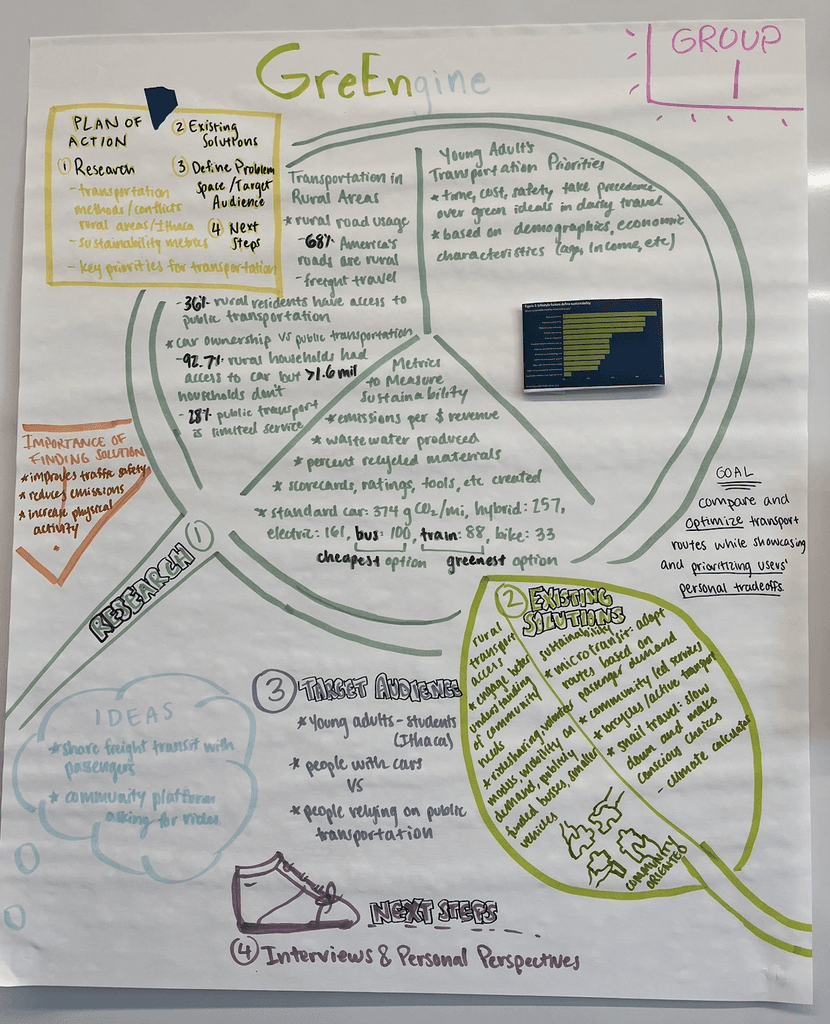
College towns like Ithaca operate more like semi-rural environments, where public transportation is limited, distances are spread out, and car access shapes mobility. Even though many students want sustainable mobility options, their transportation decisions are most influenced by time, cost, and convenience, not environmental values alone.
Key Insights:
Limited Public Transit in Semi-Rural Areas
.
Rural and semi-rural communities have high roadway mileage but limited or irregular public transit coverage. Many residents, including students, rely on personal vehicles because buses and shuttles don’t consistently align with daily needs.
.
→ Students without cars face reduced mobility and fewer access points to campus, groceries, and social activities.
Shared Mobility Works Best When It’s Community-Based
.
Research on rural and small-town transit models shows that ridesharing and community-led transportation are often more effective than expanding bus routes.
.
→ Transportation solutions must reflect the social, local, and community-driven nature of smaller town environments.
Car Ownership is Unequal and Costly
.
While most rural households own cars, many still do not, and vehicle ownership is expensive for students.
Fuel, maintenance, parking, insurance → high financial burden
When students cannot afford a car, they often travel less, limiting independence.
.
→ Transportation inequity directly affects access to opportunities.
Students Value Sustainability, but Convenience Wins
.
Young adults express high interest in environmentally-friendly
mobility, but their actual transportation choices prioritize:
speed
cost
safety
reliability
If sustainable options are inconvenient or slow, they are rarely chosen.
.
→ A sustainable solution must be as convenient as driving
Opportunity
There is a strong need for a mobility solution that:
increases access for students without cars
reduces cost and environmental impact
feels simple, reliable, and socially trustworthy
aligns with how students actually move day-to-day
Design Direction
Focus on:
convenience first, sustainability built-in
campus-verified trust system
shared rides matched by route and schedule
rewards to encourage repeat use
User Interviews
Context:
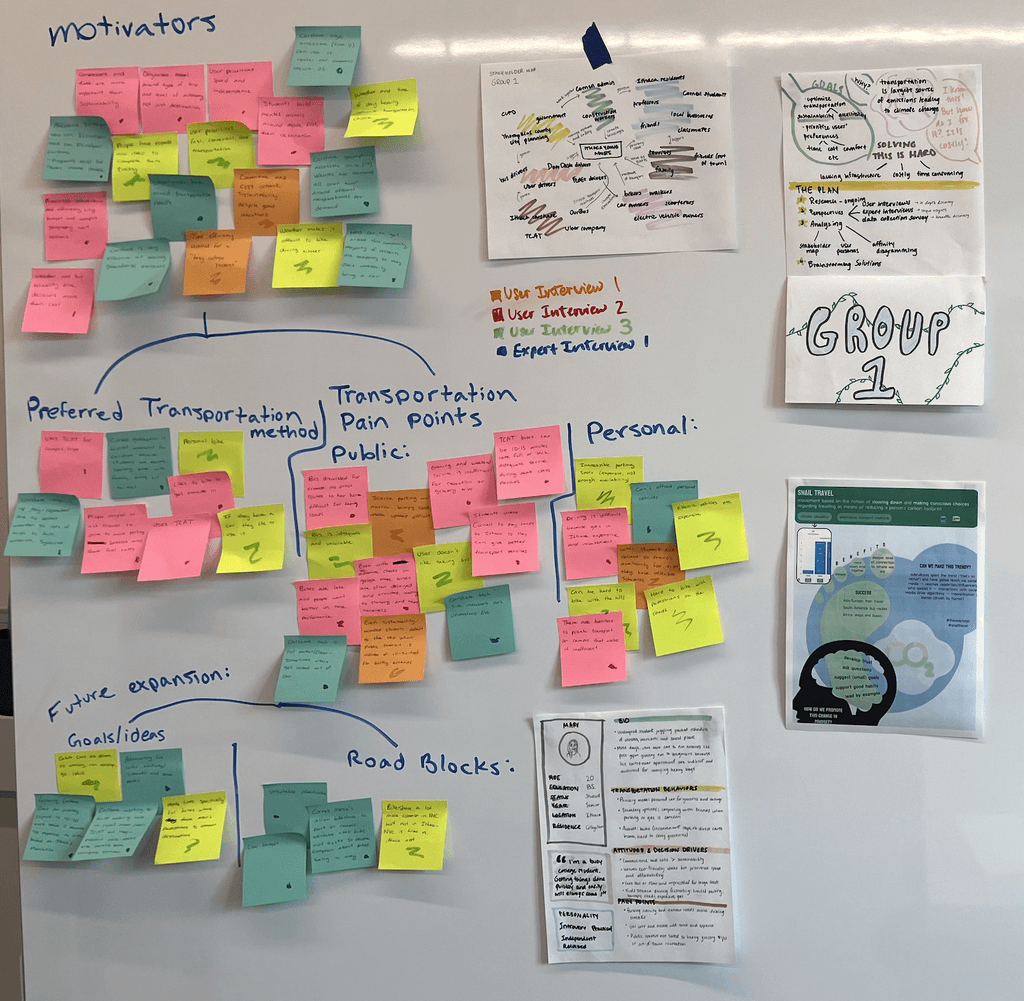
We conducted user interviews with Cornell students across different class years, housing locations, and transportation access levels to understand how they choose transportation methods and what factors shape their mobility decisions on campus and in Ithaca.
Key Insights:


GreenGo!
Project Overview:
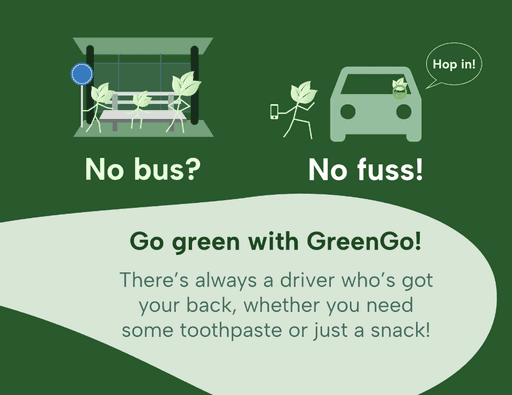
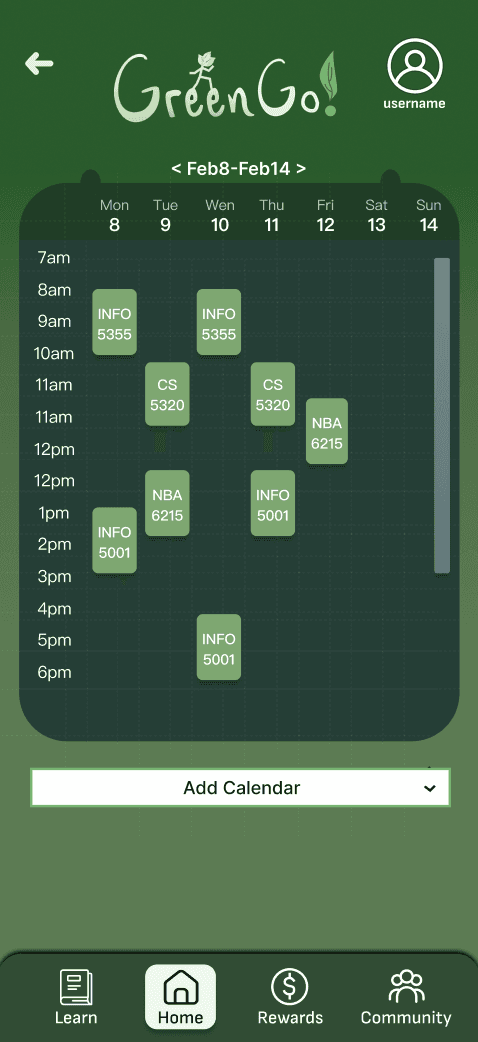
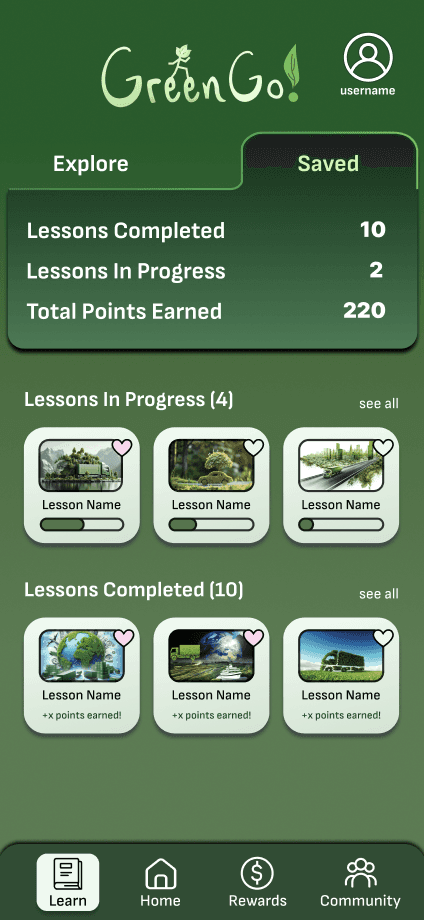
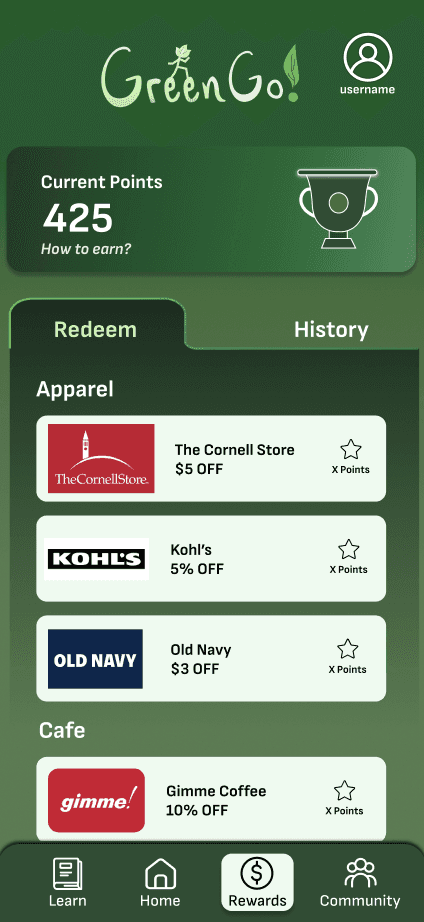
GreenGo is a sustainable transportation app that streamlines student carpooling and introduces a campus rewards system to encourage eco-friendly travel. Designed for college towns with limited transit options, the app reduces cost, congestion, and carbon footprint by making shared rides simple and social.
Timeline: September 2024 - December 2025
Tools Used: Figma
What this means
Students want transportation that is:
Predictable
Fast
Cost-efficient
Doesn’t require social coordination pressure
Works even in winter
Sustainability is a bonus, not a primary driver — so the sustainable option must be the easiest option, not the moral one.
Expert Interviews
User Personas
Context:
We also conducted expert interviews with local transportation operators and service coordinators (Ithaca Carshare and TCAT) to understand the constraints, priorities, and system-level challenges shaping mobility in Ithaca. These conversations helped us contextualize student pain points within the realities of transit planning, funding, and operational logistics.
What Students Need
What the System Can Currently Provide
Opportunity
Fast, predictable travel to classes, errands, and social activities
Easy trips to grocery stores + nature spots
Transportation without planning stress
Affordable mobility
Mobility in bad weather
Provide reliable peer-to-peer rides where transit is weak
Create preset destination-based carpools (Wegmans run, Buttermilk run, etc.)
Low-coordination matching + easy scheduling windows
Shared rides that reduce cost without sacrificing time
Reliable winter pooling + shared-ride guarantees
Bus routes are limited by funding + staffing; carshare eligibility & supply are limited
These are known gaps in bus routing + schedule design
Transit requires schedule tracking; carshare requires planning + membership
Car ownership is expensive; rideshare is inconsistent; bus is cheap but slow
Bus demand spikes in winter → overcrowding + delays
Low-Fidelity Prototyping
Medium-Fidelity Prototyping
Design Goal:
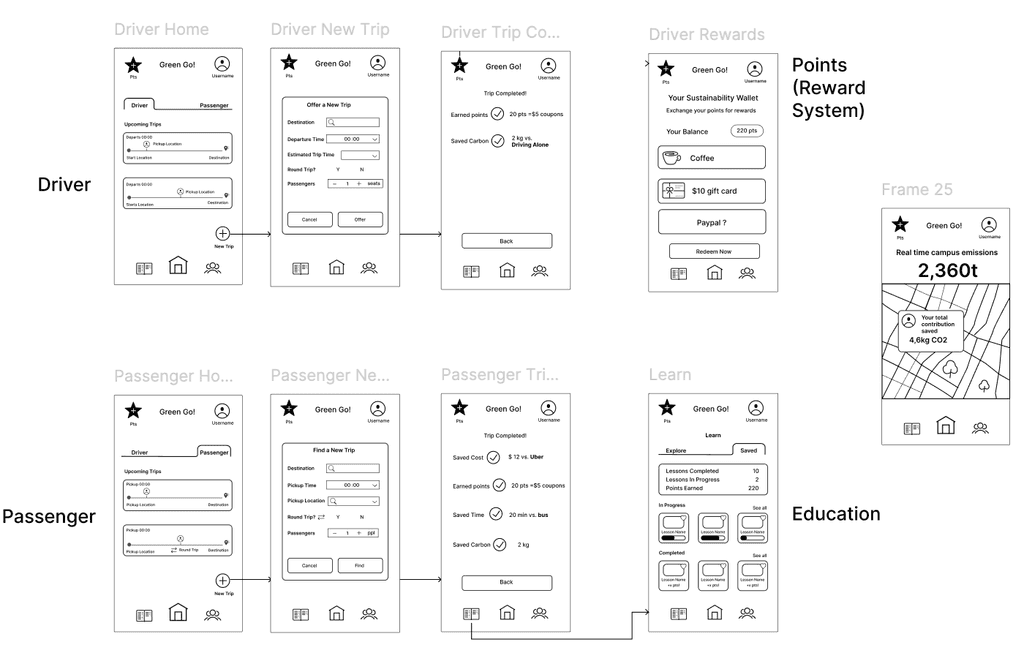
To quickly explore how students could coordinate shared rides without social friction, complex planning, or unreliable timing. At this stage, the goal was to validate core flows, not visual style.
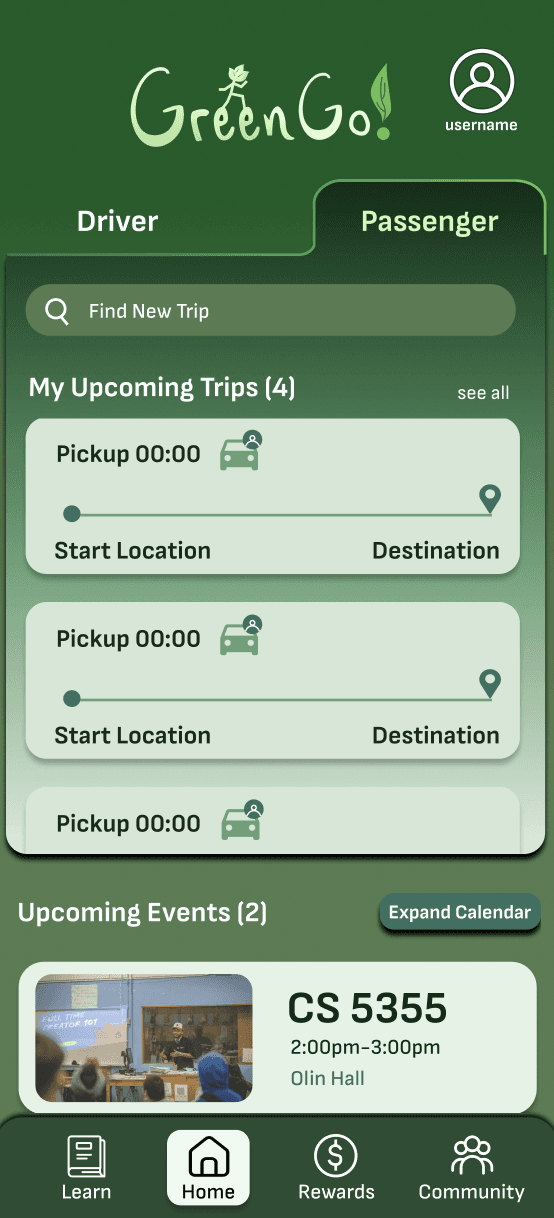
After analyzing insights from our evaluation sessions, we translated user feedback into actionable design changes and developed a mid-fidelity prototype. This version emphasized smoother task flows, clearer button labels, and a more cohesive reward system that better aligned with user expectations.
Core Flows Represented in the Prototype:
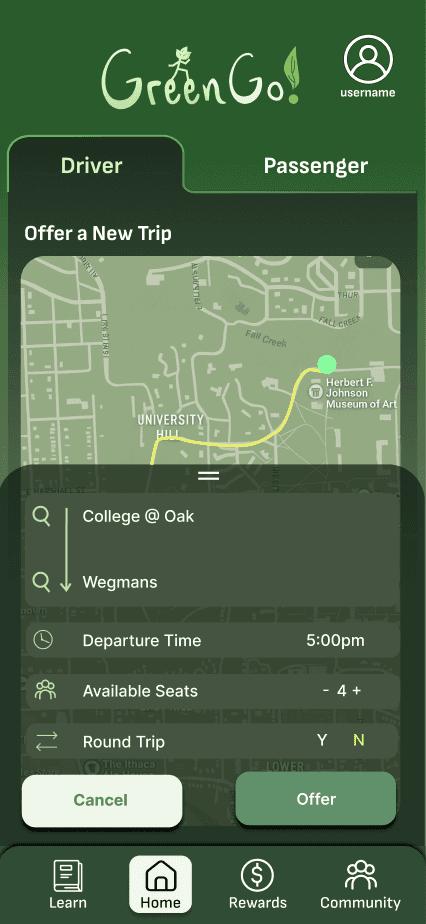
For drivers:
View & manage upcoming trips
Offer a new ride (destination → time → seats)
Complete trip & earn rewards
Redeem rewards (local cafés, gift cards, etc.)
.
Design Intent: Reduce the friction of offering a ride, and incentivize consistent community participation.
For passengers:
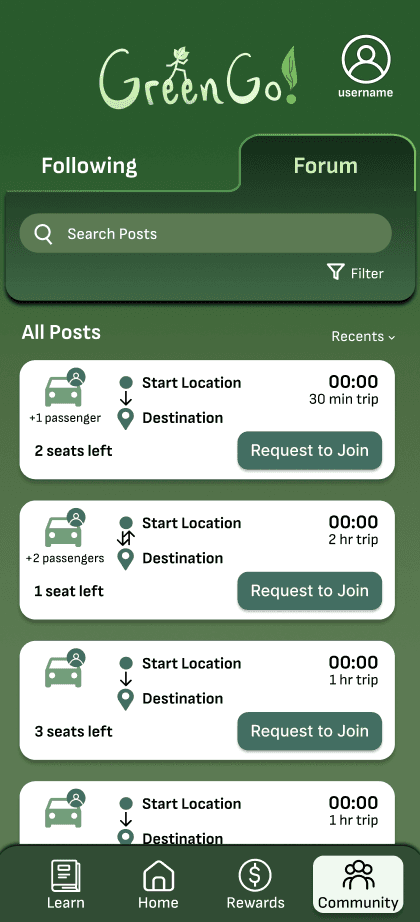
Find upcoming shared rides
Search by destination + time window
Confirm seat + view pickup details
Reflect on the impact (time, cost, carbon saved)
.
Design Intent: Make requesting a ride feel as easy as calling an Uber, but more affordable, community-based, and sustainable.
Challenge Identified in Research
Design Decision in Prototype
Why it Matters
Planning rides is socially awkward and unpredictable
Students feel guilty asking for rides
Transportation without planning stress
Sustainability is valued but not prioritized
Bus schedule transparency is poor
Reduces coordination stress
Removes social pressure + frames sharing as mutually beneficial
Makes sustainable choice feel rewarding, not moral
Shared rides that reduce cost without sacrificing time
Creates a sense of reliability and commitment
Time window selection instead of exact scheduling
Drivers earn points / rewards
Transit requires schedule tracking; carshare requires planning + membership
Show time + money + carbon saved after each trip
“Upcoming trips” dashboard
Driver (has car)
Passenger (needs ride)
Offer seats easily
.
Receive rewards
Transportation without planning stress
Request available rides easily
Get affordable + predictable travel
.
Reduce dependence on buses/friends
Why Two User Modes?
Student interviews revealed a mobility divide:
Students with cars want help filling seats + splitting cost.
Students without cars want reliable access to shared rides.
So the prototype supports two complementary user roles:
Navigation and Clarity
Trip Setup & Input Clarity
Motivation & Feedback
Rewards & Incentives
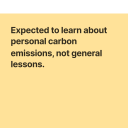
Learning & Sustainability Awareness
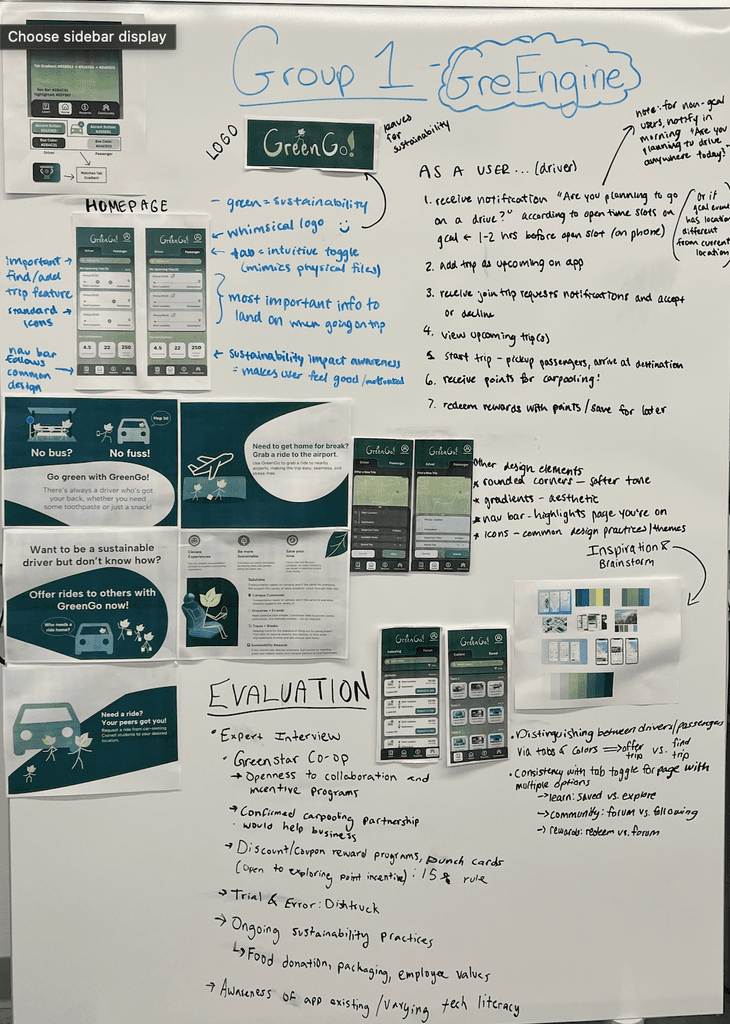
Affinity Mapping:
click here!
Sophia

Age
22
Education
Masters
Status
Student
Year
1st year
Location
Ithaca
Residence
Downtown
I plan every trip ahead of time, but if the bus is late or full, all that preparation goes out the window.
Personality
Introvert
Practical
Independent
Organized
Bio
Sophia is a Cornell grad student who thrives on planning ahead so she can get to class and social events without stress. Living in Collegetown, she depends on the TCAT bus for most daily trips but checks Google Transit the night before and again in the morning because delays and overcrowding are common.
Transportation Behaviors
•
Primary Modes: TCAT bus and walking for everyday campus trips
•
Secondary Modes: Bikes in warm weather (downhill only), occasional Uber, Zipcar, or friend’s car for errands and recreation
•
Decision Drivers: Reliability, comfort, efficiency; weather and time of day strongly influence mode choice
Attitudes & Decision Drivers
•
Must-have: Fast, convenient, cheap
•
Nice-to-have: Sustainable when it doesn’t sacrifice reliability
•
Winter weather shifts priorities toward safety and warmth; nighttime trips require direct routes and traveling with friends.
Pain Points
•
Bus Reliability: Unpredictable schedules and overcrowding, especially during morning peak, late-night hours, and weekends.
•
Infrastructure Gaps: Icy sidewalks and steep hills discourage walking or biking.
•
Limited Service: Sparse buses to recreational destinations and grocery stores.
Nick

Age
21
Education
Bachelors
Status
Student
Year
Junior
Location
Ithaca
Residence
West Campus
Biking keeps me moving and doubles as my workout. Why would I wait for a bus that might not even show up?
Personality
Extrovert
Practical
Independent
Fast-paced
Bio
Nick ia a Cornell student who relies on his own muscle and resourcefulness to get around Ithaca. Most days he bikes across campus, enjoying the speed and exercise even when the uphill climb is tough. He jokes that using an e-bike would feel like “cheating,” because riding is part of his fitness routine.
Transportation Behaviors
•
Primary modes: Bike for daily campus trips (fast, exercise, avoids traffic) and personal car for off-campus errands.
•
Avoids: TCAT buses (unreliable schedules, poor stop locations, bad past experiences)and E-bikes (“feels like cheating” and defeats exercise purpose)
Attitudes & Decision Drivers
•
Pragmatic: Sustainability is nice in theory but convenience and cost win when errands need to get done.
•
Sees Ithaca’s transit as underfunded and ill-suited to students’ real needs.
•
Values independence. Prefers modes he can control.
Pain Points
•
Public Transit: Schedules unreliable, stops inconvenient, bikes don’t fit racks.
•
Driving on Campus: Lack of parking; traffic negates time savings.
•
Grocery Access in Summer: Without a car, relied on friends who weren’t always available and felt guilty asking.
Mary

Age
20
Education
Bachelors
Status
Student
Year
Senior
Location
Ithaca
Residence
Collegetown
I’m a busy college student. Getting things done quickly and easily will always come first.
Personality
Introvert
Practical
Independent
Relaxed
Bio
Mary is an undergrad student juggling a packed schedule of classes, workouts, and social plans. Most days she hops in her own car to run errands like a quick post-gym grocery run to Wegmans because the bus routes near her apartment are indirect and awkward for carrying heavy bags.
Transportation Behaviors
•
Primary mode: Personal car for groceries and outings.
•
Secondary options: Carpooling with friends when parking or gas is a concern
•
Avoids: Buses (inconvenient stops, no direct route home, hard to carry groceries)
Attitudes & Decision Drivers
•
Convenience and cost > sustainability. She values eco-friendly ideas but prioritizes speed and affordability.
•
Sees the bus as slow and impractical for large loads.
•
Finds Ithaca driving frustrating: limited parking, bumpy roads, expensive gas.
Pain Points
•
Parking scarcity and narrow roads make driving stressful.
•
Gas cost & access add time and expense.
•
Public transit is not suited to heavy grocery trips or out-of-town recreation.
Convenience and Time Override Sustainability
.
Across all interviews, students expressed that while sustainability is valued in theory, their actual transportation choices are driven by:
Speed
Reliability
Effort / energy level
Weather
.
→ “Errands just need to get done — I can’t prioritize sustainability if it takes longer.”
→ “I’ll walk or bike if I have time. If I don’t, I Uber or drive.”
Access to a Car Creates a Mobility Divide
.
Students who have cars described transportation as easy, flexible, and social.
Students without cars described transportation as inconvenient, restrictive, and sometimes isolating.
Without a car, grocery runs, hikes, and off-campus activities become difficult or impossible.
Those without cars often feel guilty asking friends for rides.
.
→ “If you don’t have a car, your entire schedule depends on other people or the bus.”
Buses Are Unreliable for Key Trips
.
Students consistently described TCAT as:
Inconsistent in timing
Infrequent, especially on weekends and evenings
Poorly aligned with major destinations (e.g., Wegmans, Mann Library, parks)
Often crowded or late
.
Students time buses by checking apps repeatedly or avoid them entirely when rushed. .
.
→ “If you don’t have a car, your entire schedule depends on other people or the bus.”
Grocery and Errand Trips Are the Biggest Pain Point
.
The #1 most frustrating transportation experience students talked about was getting groceries:
Hard to carry bags on the bus
Bikes aren’t practical for groceries
Friends with cars aren’t always available
Rideshare gets expensive
.
→ “Going to Wegmans was a huge pain when I didn’t have a car. I had to rely on others.”
Students Already Carpool — But Informally and Inefficiently
.
Carpooling is happening through:
Group chats
Friends/housemates
“Who’s going to Wegmans?” conversations
.
But coordination is:
Last-minute
Unreliable
Socially awkward at times
.
→ “I carpool when the timing works out. But I don’t ask unless I really need to.”
Weather Dramatically Changes Transportation Behavior
.
In winter, walking and biking become unpleasant or unsafe → reliance shifts heavily to:
Bus (even if unreliable)
Rideshare
Friends’ cars
.
→ “In winter, I skip things at night if getting there feels like too much work.”
like what you see? let's connect!
nk549@cornell.edu
347-701-6877